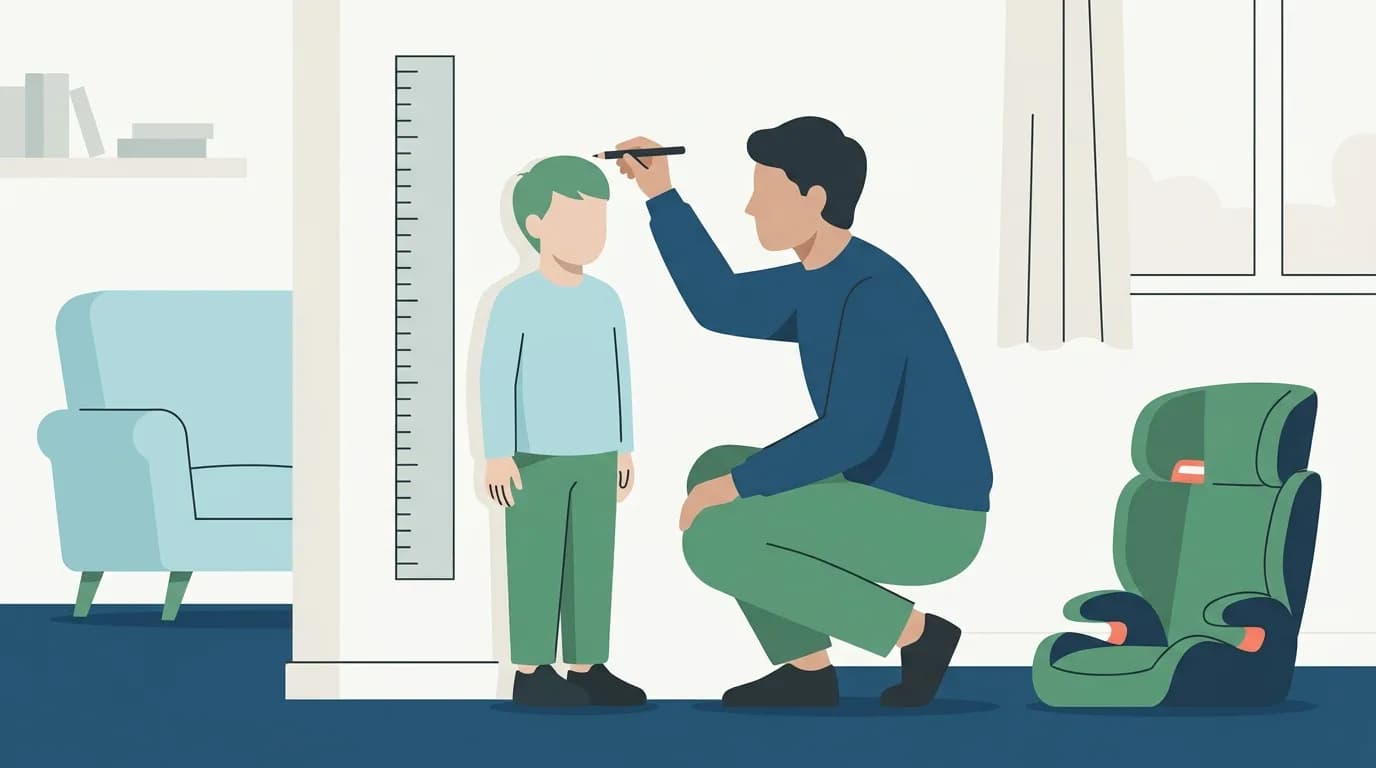
Understand the different restraint
NHTSA recommends keeping a child in a forward-facing harness and tether until the manufacturer’s upper height or weight limit is reached. A booster then positions the vehicle’s lap-and-shoulder belt. Check the exact booster’s age, size, head-support and seating-behavior requirements together.
Consider the whole journey
Think about whether the child can maintain the required position for the complete trip. A printed minimum age does not answer that individual question. Read the conditions together, not as alternative ways to qualify.
Check each vehicle separately
Different seats and belt geometries can change belt fit. A setup that works in one caregiver’s car does not establish fit in another. Follow the booster and vehicle instructions and seek fitting help if uncertain.
Know what good belt positioning means
NHTSA describes the lap belt resting on the upper thighs and the shoulder belt crossing the shoulder and chest. Follow the booster’s guides and routing instructions. If keeping that position requires reminders throughout the journey, get advice before making the transition.
Common questions
At what age can a child use a booster seat?
Age alone does not decide it. Of the booster modes in this catalogue that publish a minimum age, most require at least 4 years and some require 5, and every one of them also sets a minimum weight and height. The harness comes first: a booster is for a child who has outgrown the harness and can stay seated correctly for a whole ride.
Should my 3 year old be in a booster seat?
Almost certainly not. A three year old is usually still within the harness limits of their seat, and the manuals that state a booster minimum age set it above three. A harness restrains a child at five points and does not depend on them sitting still.
Can a 40 lb child use a booster seat?
Meeting the weight alone is not enough. Boosters state a minimum weight, a minimum height and, in most manuals, a minimum age, and the child also has to sit correctly for the entire journey. Weight is the easiest of those to reach first.
How do I know the seat belt fits correctly?
The lap belt lies low and flat across the top of the thighs, not across the stomach. The shoulder belt crosses the middle of the shoulder and the centre of the chest, never the neck or the arm. The child's back is against the vehicle seat back with knees bending comfortably at the edge, and they stay that way for the whole ride.
Go to the original source
NHTSA: Car seats and booster seats (opens in a new tab)
For individual fit or installation, consult both manuals and seek qualified help. This guide is not an installation manual.