
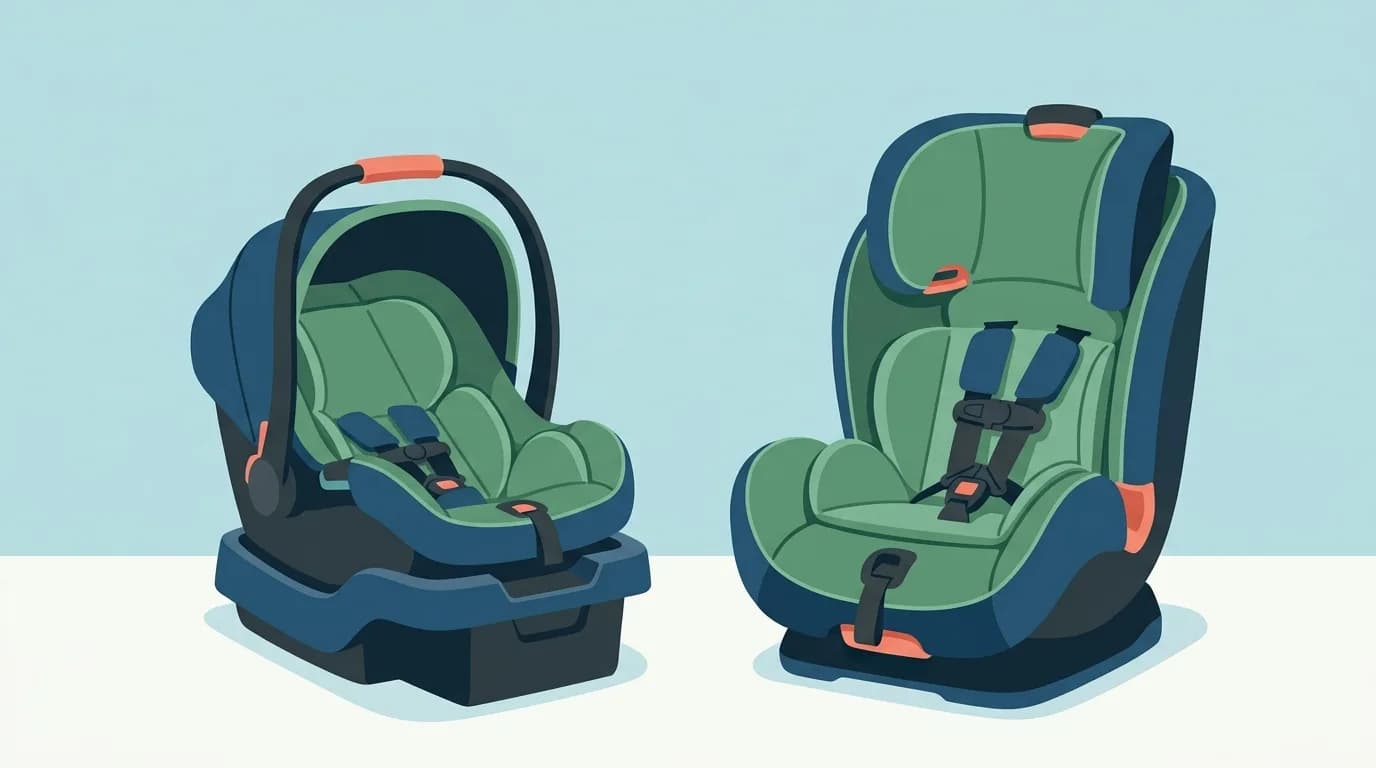
The practical differences
| Decision | Infant seat | Convertible seat |
|---|---|---|
| Harness modes | Rear-facing | Rear-facing, then forward-facing |
| Between car and destination | Removable carrier; account for carrier plus child weight | Usually remains installed; move the child in and out |
| Stroller planning | Check the exact seat, stroller and adapter combination | Plan a separate stroller arrangement |
| What happens next | Another restraint is needed when any fit limit is reached | Check the requirements separately before changing modes |
| Before buying | Check child fit, installation and the included base | Check child fit, required recline and loading access |
Check the exact model’s requirements before choosing a restraint. NHTSA’s seat-type guidance (opens in a new tab)
The removable-carrier question
An infant seat has a removable carrier; a convertible has rear-facing and forward-facing harness modes. Consider whether carrying the seat is useful on your actual routes, and what else you carry alongside it.
Compare the right weight
For a carrier, separate its weight from the combined carrier-and-base figure. If moving a complete seat, think about the work of reinstalling it too. A handle and an accessible belt path solve different problems.
Plan for outgrowing a mode
An outgrown infant seat does not automatically mean it is time to face forward. A rear-facing convertible may be the next option. Use the exact manual’s limits, including height and head clearance, rather than a product’s broad age range.
Compare the whole purchase
Make a list of the equipment each option needs: seat, included base, any extra base, stroller and adapter. Then consider the next restraint. This is a way to compare your own costs; there is no universal saving from choosing one type. Check the actual bundle and compatibility before adding prices together.
Go to the original source
NHTSA: Car seats and booster seats (opens in a new tab)
For individual fit or installation, consult both manuals and seek qualified help. This guide is not an installation manual.