Start with the two manuals, not a video
Every seat installs differently, and so does every vehicle. The seat's manual gives its belt paths, its permitted recline and its lower-anchor limits; the vehicle handbook says which seating positions have anchors and tether points, and where the belts lock. I do not reproduce either set of steps here, because a step copied from another model is how a good seat ends up installed wrong. Both manuals are usually free to download from the manufacturer, and this catalogue links the manual on every model page.
Choose one method: lower anchors or the seat belt
Both install the seat correctly on their own, and neither is safer as a rule. Use one, not both, unless the seat's manual explicitly permits using them together, which most do not. Lower anchors also have a weight limit: it is the combined weight of the child and the seat, so a heavier child moves you to the seat belt earlier than parents expect. The number is in the manual and on the seat's own labels.
Check movement at the belt path
NHTSA's check is to hold the seat at the belt path, the place the belt or lower-anchor strap passes through, and pull firmly side to side and front to back. It should not move more than one inch in any direction. Movement anywhere else, such as the top of a tall seat shell, is not the test. If it moves too much, release the belt, put your weight into the seat and retighten rather than adding aftermarket padding or a device the manual does not name.
Check the recline angle for the mode you are in
A rear-facing seat has a recline range that keeps a baby's airway open, shown by the seat's own indicator, line or bubble level. Forward-facing has its own required angle. The angle is read with the vehicle on level ground, and it changes when you tighten the installation, so it is worth rechecking after the belt is tight rather than before.
Use the top tether every time the seat faces forward
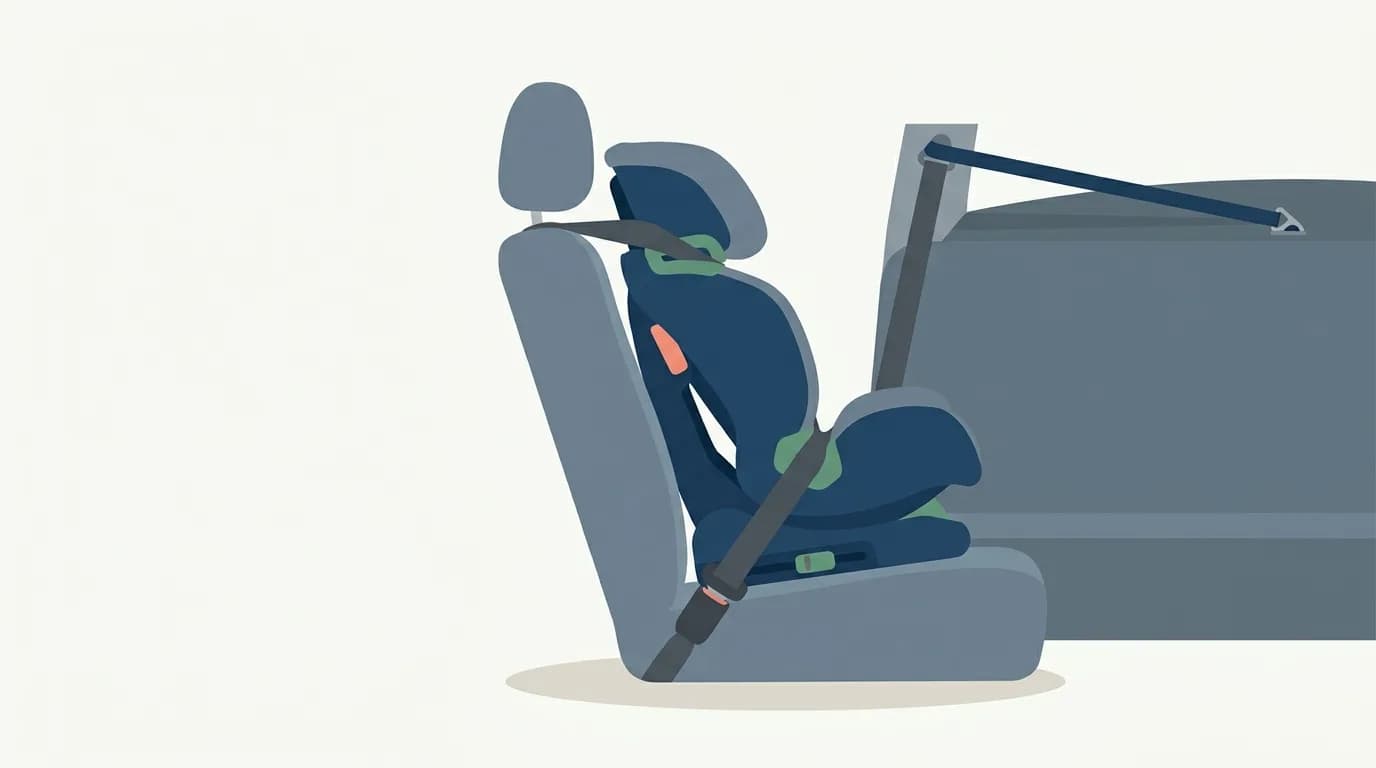
A forward-facing harness seat uses its top tether attached to the vehicle's tether anchor. It limits how far the child's head moves in a crash and it is the step most often skipped. The anchor is a fixed fitting in the vehicle, not any convenient bar or cargo hook, and the handbook shows where it is for each seating position.
Then check the child in the seat, not just the seat in the car
Harness straps come from at or below the shoulders rear-facing, and at or above them forward-facing. The harness should be snug enough that you cannot pinch a horizontal fold of webbing at the shoulder, and the chest clip sits at armpit level. Bulky coats go on over the buckled harness, not under it, because a coat compresses in a crash and leaves the harness loose.
Get it inspected if anything is uncertain
A certified child passenger safety technician will check an installation with you, usually free of charge, and NHTSA runs a locator for inspection stations by ZIP code. That is the right answer when a seat will not tighten, when the vehicle's belt geometry is awkward, or when you are unsure about anything on this page. I research published instructions here; I do not inspect seats, and this page is not a substitute for a technician or your manuals.
Common questions
How tight should a car seat be?
Held at the belt path and pulled side to side and front to back, it should move less than one inch in any direction. If it moves more, retighten with your weight in the seat rather than adding anything the manual does not describe.
Are lower anchors safer than the seat belt?
No. Both are designed to install the seat correctly, and a correct seat-belt installation is as good as a correct lower-anchor one. Lower anchors have a combined child-and-seat weight limit, so heavier children move to the seat belt.
Can I use lower anchors and the seat belt together?
Only if the seat's manual specifically permits it. Most do not, because the seat was crash tested with one method at a time.
Do I need the top tether rear-facing?
Usually not, though some seats permit or require a rear-facing tether routing. Check that seat's manual. Forward-facing with a harness, the top tether is used every time.
Where can I get a car seat installation checked?
At a car seat inspection station staffed by a certified child passenger safety technician. NHTSA lists them by ZIP code, and many fire departments and hospitals host them.
Go to the original source
NHTSA: car seat installation and inspection guidance (opens in a new tab)
For individual fit or installation, consult both manuals and seek qualified help. This guide is not an installation manual.