My take on the KeyFit 35
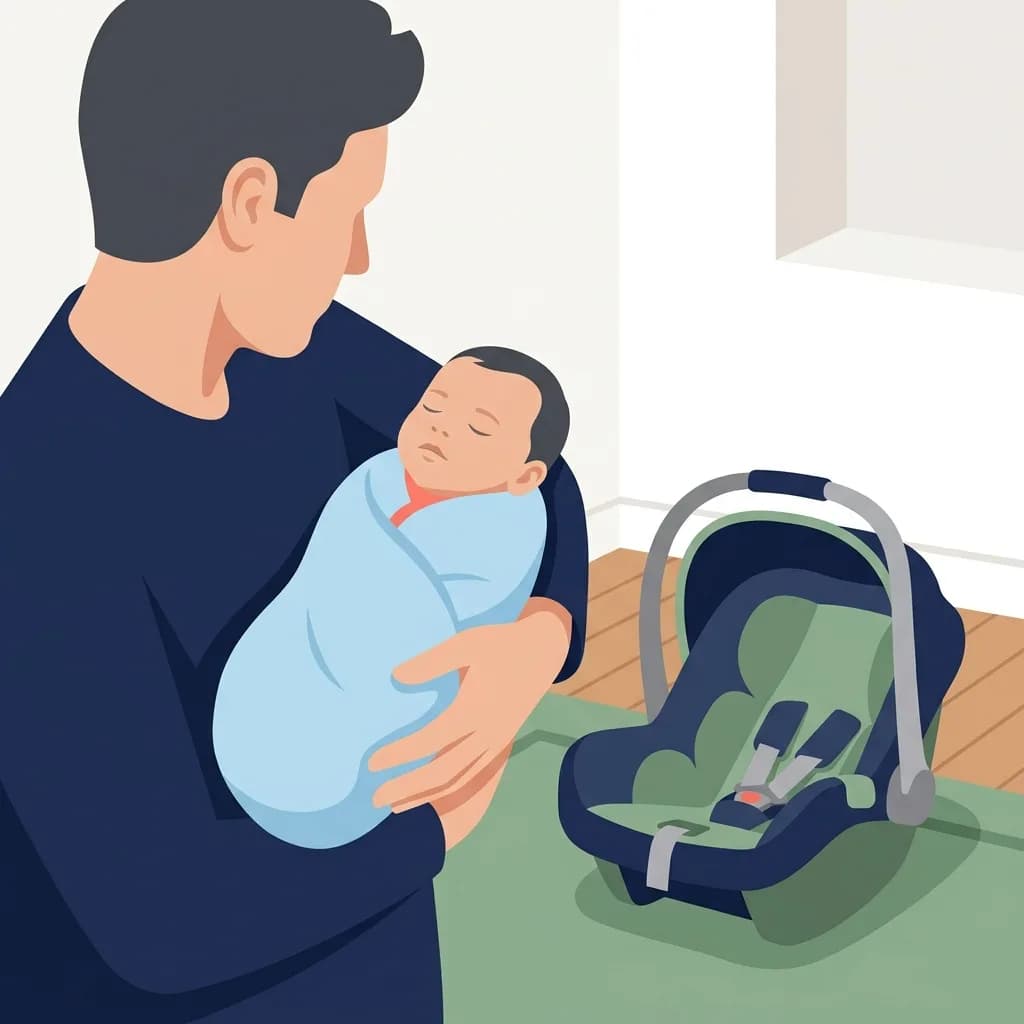
The KeyFit 35 makes sense if you want an infant carrier that comes out of a base between journeys. The key comparison is its 10 lb carrier weight and your stroller setup. Its 35 lb limit is only one of several conditions that determine when it is outgrown.
Compare the carrier weight separately from the complete seat-and-base weight. For a school run with several stops, that distinction can matter more than an extra adjustment feature. Also consider where the carrier will go when you arrive: a removable car seat does not replace a suitable sleep space.
KeyFit 35 weight and height limits
Meet every applicable condition together. These summaries help compare seats; the manual controls how to use your exact seat.
Rear-facing harness
At least 1 inch of head clearance below the headrest. Harness at or just below the top of the shoulders. Newborn positioner only for 4–11 lb; follow the manual’s fit rules.
Manual: pp. 4–5, 26–27, 80–81 (opens in a new tab)How to install the KeyFit 35
The base installs with LATCH lower anchors or a vehicle lap-shoulder or lap-only belt, and the carrier then clicks onto it. The carrier can also be belted in without the base using a lap-shoulder or lap belt that locks. Always rear-facing. The most important check is a tight install, moving less than 1 inch, at the correct recline.
Base with LATCH
Use when: the seating position has lower anchors at the standard 11 inch spacing
- the bubble on the base level indicator sits between the arrows after adjusting the recline foot
- LATCH and the vehicle belt are not used at the same time, and the top tether is not used with this seat
- the base moves no more than 1 inch side to side or forward when pulled at each side
- the carrier is locked onto the base, confirmed by lifting up on the carrier
Full steps: manual pp. 11, 20, 28, 30-34, 46-48
Base with lap-shoulder belt
Use when: LATCH is not available or not chosen, and the belt is not a prohibited type
- the shoulder belt is held tight and pressed into the Lock-Off on the side opposite the buckle
- locking a switchable retractor is optional because the Lock-Off replaces it, and locking may tilt the seat
- the base moves no more than 1 inch side to side or forward when pulled at each side
- the bubble is between the level lines and the carrier is locked onto the base
Full steps: manual pp. 18, 28, 36-40, 46-48
Base with lap belt only
Use when: the seating position has a lap belt that is not a non-locking (ELR) lap belt
- the belt goes through the base belt path and is pulled tight while pressing the base down
- the base moves no more than 1 inch side to side or forward when pulled at each side
- the bubble is between the level lines and the carrier is locked onto the base
Full steps: manual pp. 19, 28, 42-48
Carrier without base, lap-shoulder belt
Use when: the base is not available, such as in another vehicle
- the vehicle belt locks; if it does not lock, that seating position is not used
- the level line on the carrier seat label is level with the ground, and a tightly rolled towel under the front edge is allowed if needed
- the belt runs through the seat belt guides on both sides of the carrier, and the optional shoulder belt guide on the back may be used if the belt is long enough
- the carrier moves no more than 1 inch side to side or forward and the infant's head does not fall forward
Full steps: manual pp. 50-58
Carrier without base, lap belt only
Use when: the base is not available and the seating position has a lap belt that locks
- a non-locking vehicle belt is never used without the base
- the belt is put in locked mode and runs through the seat belt guides on both sides of the carrier
- the level line on the seat label is level with the ground, using a tightly rolled towel under the front edge if needed
- the carrier moves no more than 1 inch side to side or forward and the infant's head does not fall forward
Full steps: manual pp. 50, 60-62
This is an overview, not a replacement for the manual. Follow every step in the Chicco manual and your vehicle owner’s manual, and consider a free check with a certified child passenger safety technician. NHTSA installation help (opens in a new tab)
Fit checks before every ride
- Child weighs 4 to 35 lb (1.8 to 15.9 kg), and use stops as soon as the child reaches either the maximum weight or the maximum height (pp. 4-5)
- Child is 32 inches (81 cm) or less (p. 26 words this as less than 32 inches) (pp. 4, 26)
- Top of the child's head is at least 1 inch (25 mm) below the top of the headrest or seat back (pp. 4, 8, 26)
- Harness straps sit at or just below the top of the child's shoulders, with the child resting against the back and bottom of the carrier and not slouched (pp. 26, 64, 70, 76)
- Harness is snug: no fold in the strap can be pinched at the shoulders (pp. 74, 76)
- Chest clip is centered on the child's chest, level with the armpits (pp. 74, 77)
8 more checks from the manual
- Straps lie flat, free of twists and centered on top of the shoulders (pp. 72, 76)
- Both buckle tongues click in and stay latched when pulled up firmly (p. 72)
- No bulky garments or heavy clothing, and no blanket under the harness; a blanket may go over the child after the harness is tightened (pp. 70, 77)
- Newborn positioner only for infants 4 to 11 lb (1.8 to 5 kg); never used once the child weighs more than 11 lb; no other positioner, pillow or extra padding (pp. 4, 76, 80)
- Premature infants: the infant's doctor must be consulted before using the seat (pp. 4, 27)
- Handle is in one of its locked positions whenever the seat is used in a vehicle, and locked in the carry position before lifting by the handle (pp. 12, 83)
- Rear-facing only; never turned forward-facing (pp. 5, 10)
- No more than 4 inches (10 cm) of the base extends past the edge of the vehicle seat (p. 17)
KeyFit 35 user manual
The manual is the final word on limits, installation and care. I check Chicco’s manual page every week, so this link always goes to the current official file.
Chicco KeyFit 35 user manual (PDF)
- Edition
- KeyFit 35 Car Seat
- Revision
- IS0190E_03, printed 03/20
- File
- 46 pages, 3.4 MB
- Checked
Opens Chicco’s own PDF, so you always get the current file. Check that the model number on your seat’s label matches this edition. All Chicco manuals.
KeyFit 35 features
- Weight and height range
- rear-facing, 4 to 35 lb (1.8 to 15.9 kg), 32 inches (81 cm) or less (pp. 4-5)
- Harness height
- 5 height positions, adjusted with a Height Adjuster Plate under the carrier (pp. 64-66)
- Base recline
- recline foot with a bubble level indicator on the base; number of recline positions not stated (pp. 24, 28)
- Shoulder belt Lock-Off
- on the base, used for lap-shoulder belt base installation (pp. 24, 40)
- LATCH
- lower connectors with one pull strap and release lever, stored in compartments on either side of the base; standard 11 inch (28 cm) anchor spacing only; no top tether (pp. 20, 24, 79)
- Newborn positioner
- included, for infants 4 to 11 lb (1.8 to 5 kg) (pp. 22, 80)
- Head rest insert
- for head support for smaller infants, usable with or without the newborn positioner (pp. 14, 82)
- Carry handle
- 3 positions: carrying, stationary and rocking (p. 83)
- Canopy
- rotates forward or backward and is removable (p. 84)
- Baseless belt routing
- seat belt guides on both sides of the carrier, plus an optional shoulder belt guide on the back (pp. 22-23, 56)
- Base compatibility
- the KeyFit 35 base takes only Chicco KeyFit, KeyFit 30 and KeyFit 35 carriers, and not the Fit2 carrier (p. 11)
- Manual storage
- user guide stores inside the base (p. 24)
Specifications
Outer width
16.5 in
Manufacturer’s outer width, not a three-across or vehicle-fit guarantee.
Source: SpecificationsInstallation
Base: LATCH or vehicle belt. Carrier: permitted baseless belt installation.
Source: pp. 28–62Base & configuration
Separate stay-in-car base; check the exact retailer bundle.
Source: Product descriptionHow to clean the KeyFit 35
- Fabric
- Fabrics may be spot-cleaned, hand washed with mild soap and water, or machine washed in cold water on a delicate cycle with mild detergent, then hung to dry. Shoulder pads are hand washed with mild soap and water and hung to dry. The seat must never be used without the seat pad.
- Harness and straps
- Harness: sponge clean with warm water and mild soap, air dry, do not machine wash; do not use the seat if any part of the harness is damaged. LATCH straps: sponge clean with warm water and mild soap, air dry; they cannot be replaced. LATCH and harness adjuster straps are not to be removed.
- Plastic parts
- Sponge clean with warm water and mild soap, then towel dry.
- Also note
- No bleach, solvents or household cleaners. No soaps or lubricants on the buckle or LATCH hardware; sponge them with warm water only, and if debris is in the buckle, remove it and rinse in a warm cup of water, then air dry. Softgood removal instructions are on the Chicco website or by phone.
Manual pp. 86-87
How long does the KeyFit 35 last?
Do not use the seat if it is more than 6 years old; the Do Not Use After date is on the manufacturer's label on the underside. The seat must be replaced after any crash, even without visible damage. (manual p. 13)
Can you use the KeyFit 35 on a plane?
Certified for use on aircraft. Contact the airline before travel about its child restraint policy. Use only on forward-facing aircraft seats. Install it the same way as with a vehicle lap belt, referring to the without-base lap-belt-only installation on p. 60. Chicco recommends bringing the carrier on the plane. (manual p. 85)
Flying with a car seat: what to checkWhat to consider day to day
Carrying it is a different question from installing it
The carrier and base do different jobs. Leave the base installed and you carry the carrier, plus the child and anything else you need. If you expect to carry it far, think through stairs, parking distance and where you will put it down. A listed weight cannot tell you how that routine will feel.
Check the bundle before comparing prices
A seat-only listing, a replacement base and a stroller travel system are different purchases. Confirm the model, included base and accessories on the current listing. Do not assume a similarly named KeyFit Max, Fit2 or another-market version shares these specifications.
A car seat is for travel
A removable carrier can make transitions convenient, but it should not be treated as a replacement for an appropriate sleep space. Read the manual’s warnings and plan what happens after you arrive, as well as how you get there.
Chicco KeyFit 35 recalls
Updated daily from NHTSA’s official recall data. Last checked (NHTSA file dated ).
NHTSA’s child restraint recall data since 2010 has no campaign naming the KeyFit family. This is a search by model name. It cannot check your seat’s model number, manufacture date or history, so compare the label with NHTSA’s recall lookup (opens in a new tab) before use.
Other Chicco car seat recalls
These campaigns name different Chicco models. They are listed so you can tell them apart from this seat.
- Chicco Myfit recall (25C005000)
Register your seat so Chicco can reach you about a recall. Registration is required to be reached in a recall: mail the registration card, send name, address, email if available, model number and manufacturing date to Artsana USA, call 1-877-424-4226, or register online. Recall information is also available from the NHTSA Vehicle Safety Hotline at 1-888-327-4236 or NHTSA.gov. (manual p. 2)
Search all car seat recallsWhat I have not verified
- This entry covers the standard US KeyFit 35, not KeyFit Max, Fit2, or a Canadian version.
- Stroller compatibility, exact retail bundle, and licensed product photography have not been verified.
- No hands-on fit assessment or crash testing was performed.
KeyFit 35: common questions
What are the KeyFit 35 height and weight limits?
The manual used for this entry gives 4-35 lb and a height of 32 inches or less. It also requires at least 1 inch of clearance between the top of the head and the top of the headrest. Every condition applies; reaching one limit means the seat is outgrown.
How heavy is the carrier without the base?
Chicco lists the carrier at 10 lb and the seat with its base at 18.5 lb. These are manufacturer figures, not my own measurements. Add the child’s weight when thinking about carrying it.
Can it be used without its base?
The KeyFit 35 manual includes a carrier-only vehicle-belt installation. Follow that exact belt-routing and recline procedure; do not improvise from the base instructions.
Will it fit my stroller?
I have not verified a stroller-and-adapter combination for this entry. Check the stroller manufacturer’s current compatibility list for the exact KeyFit model, stroller generation and adapter.
Has the KeyFit 35 been recalled?
No matching campaign was found in the NHTSA post-2010 recall data and Chicco notices checked September 17, 2026. This dated model-family search cannot clear an individual seat. Check your model number and manufacture date against current notices before use.
Is the KeyFit 35 discontinued?
I have not confirmed that the KeyFit 35 is discontinued. Chicco’s US product page and manual were available when checked on September 17, 2026. That does not confirm stock or future support; ask Chicco about current availability and replacement parts for the exact model.
Answers refer to the model and manual version on this page. Check the instructions supplied with your seat.
What about owner reviews?
I have not collected verified owner reviews for this model. Comments about comfort or convenience can be useful, but they do not establish crash performance or fit in your vehicle. This review does not include a star rating.
More KeyFit 35 videos from Chicco
Official Chicco videos, linked from Chicco’s product page (opens in a new tab) and checked September 17, 2026. Match the video to your seat’s labels and manual revision.
Manuals and sources
Evidence checked September 17, 2026. Manual: IS0190E_03 · March 2020, currently linked by Chicco. A source check does not establish that a retailer is selling this same revision.
- KeyFit 35 user guide (opens in a new tab)Checked 2026-09-17
- Chicco KeyFit 35 specifications (opens in a new tab)Checked 2026-09-17
- Chicco recall notices (opens in a new tab)Checked 2026-09-17
- NHTSA recall datasets (child restraints included) (opens in a new tab)Checked 2026-09-17