
| Mode | Weight | Height |
|---|---|---|
| Rear-facing infant | 4–30 lb | 16–30 in |
- Seat weight
- 6 lb
- Width
- 17.5 in
- Usable life
- See label
- Aircraft
- Certified
1 / 1 Image from Nuna
Image: Nuna, from nunababy.com. Colors may differ from the seat you buy. See it on nunababy.com
An infant car seat with one mode: rear-facing infant 4 to 30 lb, 16 to 29 in.
Sold by Nuna. Not an affiliate link; this site earns nothing from it.
The Nuna PIPA urbn is a rear-facing-only infant car seat for babies from 4 to 30 lb and 16 to 29 inches. It has no base: pipaFIX rigid lower anchor connectors are built into the carrier, and it can also be belted in. Nuna sells it only in travel systems, and the expiration date is on a label.
The PIPA urbn suits a family that moves the seat between cars, taxis and a stroller and does not want a base. The trade-offs are a 29 inch height limit and no stand-alone purchase, since Nuna says there is no current plan to sell it alone. It is not compatible with the PIPA series base or the RELX base. The PIPA aire is listed for 16 to 30 inches and comes with the PIPA series base.
A research summary of Nuna’s published specifications and manual, read . Not a hands-on test or a crash-safety rating.
This seat covers one stage. Check the date label on the shell before using a hand-me-down; every seat has an expiry.
| Mode | Child weight | Child height | Minimum age | Conditions |
|---|---|---|---|---|
| Rear-facing infant | 4 to 30 lb | 16 to 29 in | Not published | Rear-facing only; installs without a base using integrated pipaFIX rigid latch or vehicle belt |
A child must meet every limit for the mode they use. The labels on your seat and its manual are the final word.
Every install is a fit between one seat and one vehicle. Read both manuals, and use a free inspection station if anything is unclear.
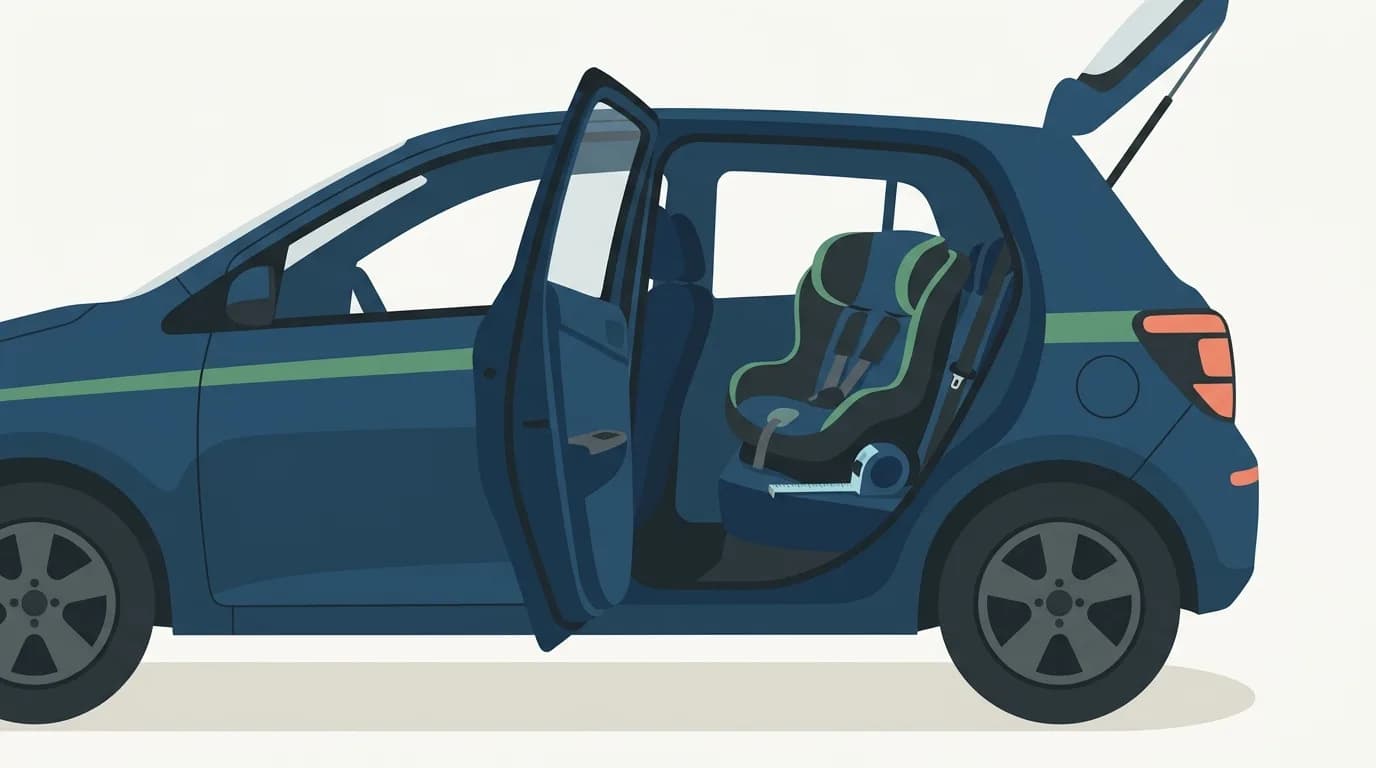
At 17.5 in at its widest, this seat is one of the narrower ones in its class and is a candidate for three across in many mid-size cars. It weighs 7 lb, which matters if you will move it between cars or carry it through an airport.
Fit the lower anchor guides first. Rotating the rigid connectors down also lowers the recline bar, which helps set the angle. Place the carrier rear-facing on a forward-facing vehicle seat and push both connectors onto the anchors until they click. Pull on the carrier and check for green; red means try again. The level line on the label should be as level as possible with the ground. A gap to the vehicle seat back is described as a correct install. If you want to close it, the manual suggests a more upright vehicle seat back or a belt install instead. Belt and connectors together are allowed if the level is kept.
The preferred belt option routes the lap belt under both lap belt guides and the shoulder belt around the back of the carrier through the blue shoulder belt guide. The second option leaves the shoulder belt against the vehicle seat back. A rolled towel or pool noodle may adjust the angle until the blue line is level. Lock the belt, or get a locking clip from Nuna. The carrier should not move side to side more than 1 inch at the belt path. Inflatable belts, door-mounted belts and lap belts forward of the seat bight cannot be used. On an aircraft, the lap belt goes under both guides with the blue line level with the floor.
The head and body supports are for small babies, and the head support straps go only in the top two harness slots. The smaller head support piece can come out once outgrown. The body support and the low birth weight pillow inside it must be removed once the child reaches 11 lb. Harness straps sit at or just below the shoulders, and changing height means unhooking each loop from the metal splitter plate. The handle has 3 positions and can be used in the vehicle in any locked position, but it must be locked in the carry position before lifting.
To remove the seat pad, take off the canopy and crotch pad and undo the fabric snaps. Then pull out the fastening pieces under the edge of the seat, starting at one front corner. Unhook the harness from the splitter plate and pull the adjuster strap through its opening. Washing follows the care label on the soft goods. Do not remove the foam or tape under the seat pad. Clean the shell, handle and straps with mild detergent, water and a soft cloth. Rinse the buckle with warm water only, since soap or lubricant can make it malfunction.
No campaign in the current NHTSA child-restraint data names this model family, and I have not run a separate review for it. Check your seat’s model number and date of manufacture before use.
No. Nuna says the PIPA urbn cannot be installed with a base and is not compatible with the PIPA series base or the PIPA RELX base. It installs with its pipaFIX lower anchor connectors or a vehicle belt.
Nuna TRIV next + PIPA urbn travel system product page (opens in a new tab)
The manual gives 4 to 30 lb and 16 to 29 inches. The top of the child's head should also be at least 1 inch below the top of the seat.
Nuna lists it at 7 lbs without canopy and inserts, with the canopy and insert adding approx. 2 lb.
Nuna TRIV next + PIPA urbn travel system product page (opens in a new tab)
Nuna says there is no current plan to offer the PIPA urbn as a stand-alone car seat. It says pairing it with a stroller as a travel system makes the most sense.
Nuna TRIV next + PIPA urbn travel system product page (opens in a new tab)
The manual says it attaches to the Nuna TAVO series and TRVL without adapters. Other Nuna strollers need a PIPA series adapter, such as the infant car seat ring adapter, sold separately.
Nuna lists the PIPA aire for 4 to 30 lbs and 16 to 30 in, at 6 lbs without canopy and inserts, and sells it with the PIPA series base. The urbn, by contrast, installs without a base.
Nuna PIPA aire + PIPA series base product page (opens in a new tab)
Answers refer to the model and manual version on this page. Check the instructions supplied with your seat.
| Model | Top child weight | Seat weight | Width | Usable life |
|---|---|---|---|---|
| PIPA urbn infant car seat (this seat) | 30 lb | 7 lb | 17.5 in | — |
| PIPA aire infant car seat | 30 lb | 6 lb | 17.5 in | — |
| PIPA aire rx infant car seat | 30 lb | 6.2 lb | 17.5 in | — |
| PIPA rx infant car seat | 30 lb | 7.6 lb | 17.5 in | — |
Other infant seats whose published weight and height limits overlap the PIPA urbn infant car seat.
| Mode | Weight | Height |
|---|---|---|
| Rear-facing infant | 4–30 lb | 16–30 in |
| Mode | Weight | Height |
|---|---|---|
| Rear-facing infant | 4–30 lb | 16–30 in |
$650.00Price on nunababy.com as of 2026-10-07 05:48 UTC, subject to change
| Mode | Weight | Height |
|---|---|---|
| Rear-facing infant | 4–30 lb | 16–30 in |
| Mode | Weight | Height |
|---|---|---|
| Rear-facing infant | 4–35 lb | Up to 32 in |
$399.99Slate · Amazon price as of 2026-11-01 12:08 UTC, subject to change


